.png)
Dec 2025
Buying renewable energy is no longer just about volume, it’s about timing, flexibility, and real-world impact. From Denmark, Reel is using granular energy data to align companies’ actual electricity demand with new wind, solar, and battery projects, reshaping how corporate energy procurement supports the green transition.
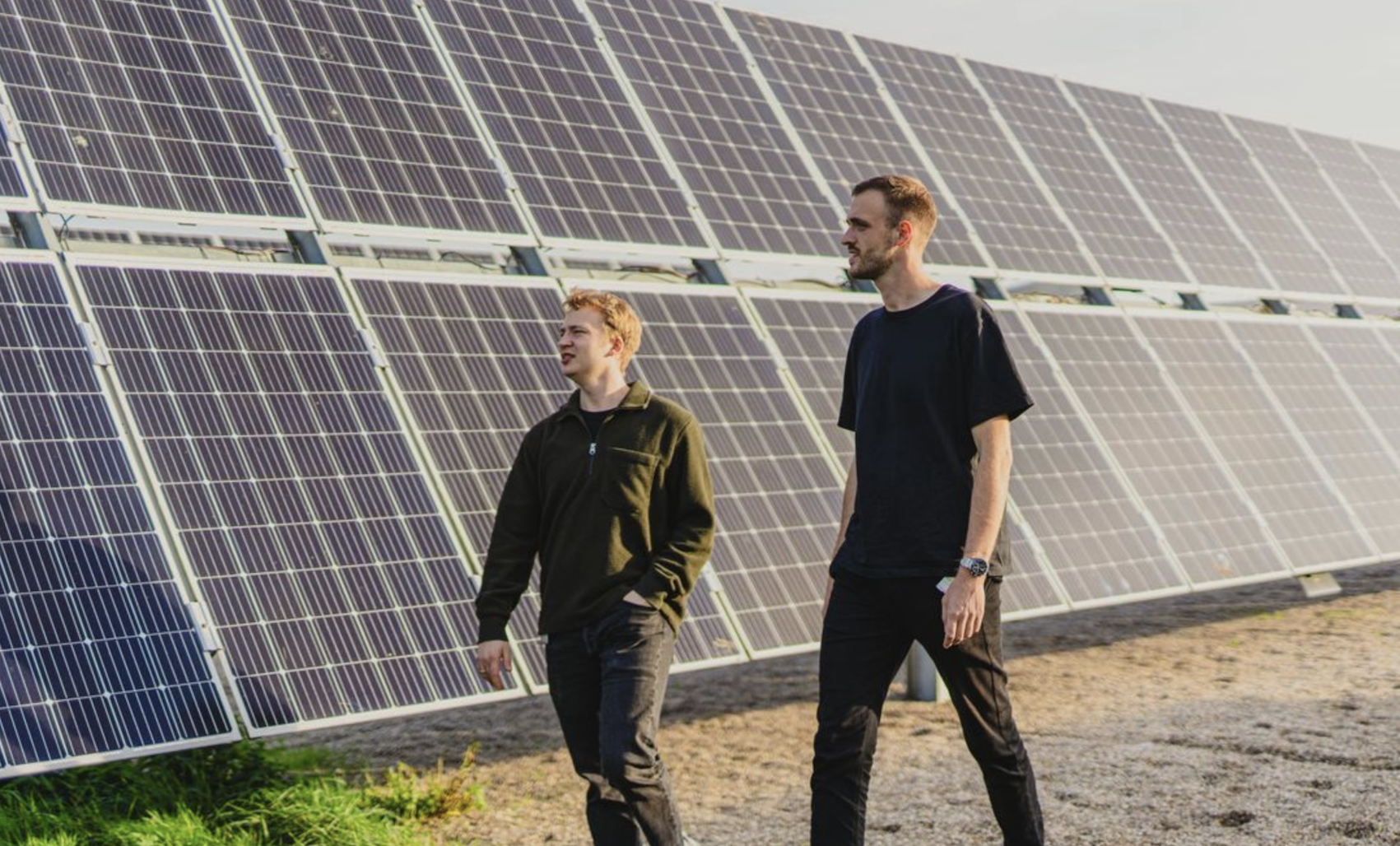
As Europe races toward its climate targets, the pressure is growing not just to consume renewable energy, but to build it fast, efficiently, and in ways that actually align with the needs of the companies meant to use it. This is exactly where the Danish energy-tech company Reel has carved out its place.
“We’re an electricity supplier, but we’re not a traditional one,” says Christian Randløv Schmidt, CTO and co-founder of REEL. “Our whole purpose is to help companies buy electricity in a way that actively drives new wind, solar, and battery projects, aligned with their individual power consumption,“ he adds.
In practice, Reel functions across the entire ecosystem: it supplies electricity to businesses, manages renewable energy production, structures and delivers Power Purchase Agreements (PPAs) for companies seeking long-term renewable contracts, optimises and operates energy assets, and even acts as a balancing responsible party trading directly in the power markets. Few players combine these roles under one roof. Even fewer are building tailored renewable portfolios based on live and historical consumption data.
What Reel is solving might look like an invisible problem. But in the energy world, it matters enormously. Corporations often sign PPAs for the same annual electricity consumption volume they use. But matching annual production from, say, a solar park with a company’s minute-by-minute usage rarely works.
“If you use 500 MWh a year, most suppliers will simply sell you a solar PPA that produces 500 MWh. But there’s no realistic match between when the solar park produces and when your company consumes.” Schmidt explains and adds, “Financially, it’s usually not a great deal, and climate-wise, it’s not either.”
Without time-based alignment, companies end up with renewable energy certificates on paper but real-world system imbalances in practice.
Thanks to Denmark’s centralised DataHub, a unique asset internationally asset operated by the national TSO, Energinet, the company can access highly granular consumption data (down to hourly or even 15-minute intervals).
By combining this with production patterns, Reel can model and determine what an optimal energy portfolio for a company should look like.
The result is a bespoke mix: some solar, some wind, and increasingly battery storage to smooth peaks and gaps.
“It’s never perfect. But we can get far closer to a meaningful match than what’s typically offered today,” Schmidt says.

To understand Reel’s innovation, it helps to zoom out to the broader system challenge: renewable energy is abundant but inflexible. The sun shines when it shines. The wind blows when it blows. And Europe’s grids are struggling with the resulting volatility.
“If we want companies to rely on renewables, we need to understand exactly when those renewables aren’t enough, and where storage or flexibility needs to fill the gap,” Schmidt explains.
With detailed data, Reel can model when renewable energy supply falls short, how large storage assets need to be, which types of batteries are suitable, how to operate them in real time, and how electrification trends, such as EV charging peaks at 1 a.m., shift pressure on the grid.
The emerging frontier, Schmidt argues, is not about asking people to change their behaviour but about introducing flexibility through assets like batteries.
“Demand-side flexibility is important, but it’s difficult to ask a factory to rearrange its production schedule every time the wind changes. Storage brings the flexibility back into the system.”
The Danish energy system offers features Reel considers world-class, like a highly digitised TSO with transparent processes for new services like flexibility markets that deliver a DataHub where all consumption and production data lives. Add to that digital identity-based mandates, allowing customers to grant and withdraw data access instantly.
“When customers share data with us, they do it through a digital mandate with MitID. They can revoke it any time. And we’re transparent about exactly what we use it for,” Schmidt says.
The combination of regulatory clarity, data accessibility, and deep digital culture makes Denmark an unusually fertile ground for energy innovation. It’s also what allows a company like Reel to launch entirely new services, such as providing grid stabilisation flexibility, much faster than would be possible elsewhere.
But if Denmark is a dream market, the rest of Europe can feel more complex to navigate. Even though European energy markets are becoming markedly more aligned, data conditions remain uneven. In some countries, centralised access is improving. In contrast, in others, new entrants still need to stitch together their own infrastructure or buy access from third-party aggregators that collect meter data from dozens of local grid operators.
“Once you leave Denmark, data doesn’t flow quite as easily. There often isn’t a single source of truth, which makes operations more complicated, and sometimes more expensive,” Schmidt says.
Several markets still lack sufficiently granular data to build high-resolution models, and some impose heavy integration requirements when energy companies connect to transmission or distribution operators. And while the EU has harmonised many trading rules, data access, the foundation for competition and innovation, is progressing at different speeds across Europe.
“European electricity markets are becoming more aligned. It’s not perfect, but the direction is good. And for companies like ours, that makes international expansion a lot easier,” Schmidt adds.
Reel is expanding rapidly. New renewable energy assets are continuously built thanks to companies that sign PPAs with Reel. Their model represents a tangible contribution to Denmark’s climate progress. Reflecting this momentum, Reel has also signed an additional Power Purchase Agreement with 31 companies, a record for the most signatories in a single PPA transaction.
And Reel’s broader vision? A future where energy procurement isn’t just a financial decision but a system-shaping force and where each company’s choices directly influence how and where new renewables are built.
“If we understand consumption precisely, we can design renewable portfolios that genuinely fit companies’ needs and use our electricity offering to reduce both energy costs and strain on the electricity grid as a whole. That’s where the real value is.” Schmidt concludes.

.png)