.png)
Dec 2025
The green transition will only succeed if households can see, understand, and act on their own energy use. From Denmark, KlimaID shows how open data and trusted digital infrastructure can turn everyday citizens into active climate actors without needing technical expertise.

Around the world, governments are grappling with an uncomfortable truth: the green transition will succeed only if citizens can meaningfully participate. Yet in most countries, households have limited access to the data they need to understand their own energy consumption, let alone reduce it.
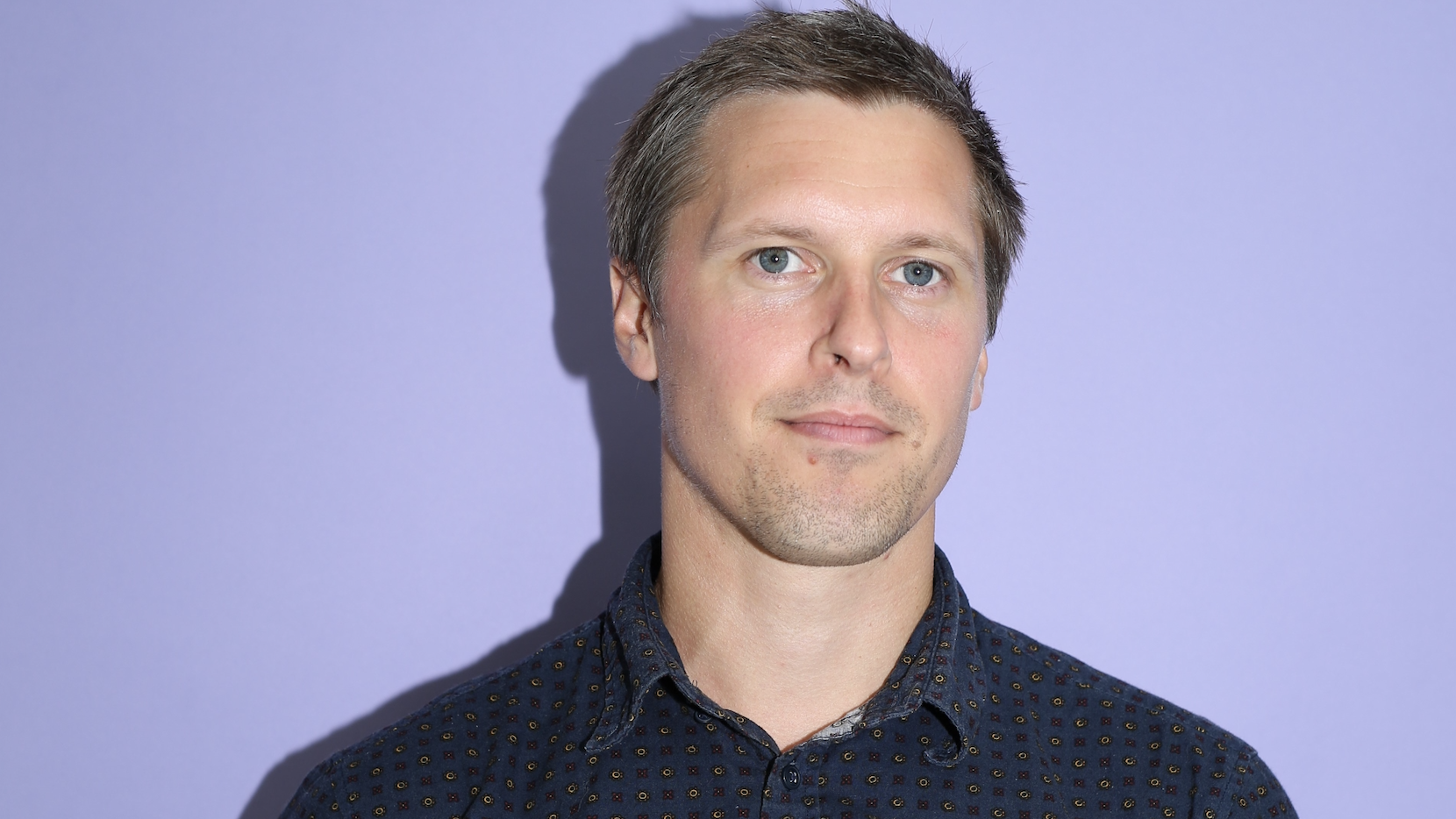
In Denmark, however, a young company called KlimaID is showing what becomes possible when a nation’s digital infrastructure empowers people rather than restricts them. And at the centre of this story is Torben Kirk Wolf, an engineer-turned-data-scientist who believes that energy data should be a tool for everyday life, not just for utilities and experts.
“We talk a lot about industrial emissions and large buildings, but some of the biggest inefficiencies are hiding in ordinary homes,” Wolf says and adds:
“Most people don’t have an engineer or an energy consultant to help them. And honestly, they shouldn’t need one. They need insights that make sense.”
The origin story of KlimaID reads like a case study in bottom-up innovation. Wolf discovered that he could download a CSV file from his electricity smart meter and began exploring his own household consumption. Patterns emerged: unexpected peaks, heating inefficiencies, behaviours that cost far more than he assumed. He shared his findings online, where they quickly gained traction.
“I posted some of it on LinkedIn, and people were fascinated,” he recalls. “So, I built a small open-source tool, partly to show how far you can go with Excel alone, and within weeks 3,000 Danes were using it. That’s when I realised: people want this knowledge. It empowers them.”
What began as a curiosity project soon grew into a venture. Wolf teamed up with a co-founder and eventually left his job to build KlimaID full-time. Today, the company provides an intuitive app that gives citizens near real-time insight into their water, heating and electricity use and, crucially, helps them understand the why behind it.
KlimaID is deliberately contrarian in a field obsessed with prediction models and machine learning. While Wolf is an accomplished AI practitioner, he insists that prediction is not what most households need.
“Forecasting energy prices or demand curves is great for big companies. But families don’t live in time-series models. They live in habits. If your thermostat is set incorrectly, if your toilet is leaking, or if your morning showers are unusually expensive compared to those of similar households. That is what matters,” he explains.
Instead of complex AI-driven recommendations, KlimaID focuses on clarity. Users receive insights into patterns, benchmarks against comparable homes, and alerts about inefficiencies that can be fixed once and for all.
There is still AI under the hood: identifying electric vehicle charging patterns, filling gaps in meter data, or helping utilities spot anomalies. But as Wolf puts it, “AI is a tool, not the centre of the story. The real story is empowering people with information they can act on.”
KlimaID’s success is inseparable from Denmark’s unique digital architecture and the regulatory principles that underpin it. The country’s national e-ID system (MitID), combined with open public registers such as the CPR population register, the BBR building registry, and ownership databases, creates a level of interoperability few nations can match.
It allows KlimaID to verify who lives in a home, who is authorised to access consumption data, and how to benchmark that home against comparable buildings, all with full transparency for the user.
But just as important as the digital tools are the rules that govern them. Denmark’s strong GDPR framework is not a constraint for KlimaID; it is a cornerstone of the company’s operating model.
“GDPR is a huge part of our DNA. Our entire business is built on the principles it outlines. It creates the trust we rely on, and it gives us clear guidelines, so we never step outside the lines,” Wolf says.
He adds that this clarity is what allows KlimaID to innovate at speed:
“We dare to build what we build because people trust us, and because the rules ensure we treat their data responsibly. GDPR is not a blocker, it enables innovation.”
KlimaID practices strict data minimisation, anonymisation, and EU-based hosting. Wolf is unequivocal:
“If people have even a small doubt about how we treat their data, we don’t have a company.”
Despite Denmark’s digital strengths, not all sectors are equally mature. Electricity data is standardised in a national datahub, enabling seamless access and oversight.
But water and district heating, both critical to consumption and emissions, remain fragmented across hundreds of local utilities.
“On water and heat, every utility is doing its own thing. Some are advanced. Some are very small. And many can barely do analytics at all,” Wolf explains and adds: “If we standardised water and heating data just like electricity, it would unleash enormous innovation.”
For now, the fragmentation gives KlimaID a first-mover advantage. Today, the KlimaID solution is the only one capable of integrating with so many systems. But the broader potential remains untapped.
KlimaID is already looking beyond Denmark, but not every market is ready. Norway, Sweden and Finland, with strong e-ID systems, look promising. The Netherlands and the UK also show potential.
But countries like Germany pose significant challenges.
“If a country has digital registries but only government agencies can access them, we can’t build our service. Benchmarking becomes impossible. And without benchmarking, we lose a huge part of the value,” Wolf says.
The company’s international strategy will prioritise digital readiness over market size: KlimaID thrives only where digital trust, identity systems, and open public data enable responsible innovation.
For international policymakers, KlimaID illustrates a powerful lesson: digital infrastructure is not just an administrative convenience, it is climate infrastructure.
“When ordinary people get simple, reliable insights about their own home, they change their behaviour. Data is not abstract. It is deeply personal. And when used responsibly, it becomes one of the most powerful tools for the green transition,” Wolf says.
In a world searching for scalable climate solutions, Denmark’s approach, and KlimaID’s execution, offer a compelling model: start with trust, build with transparency, and give citizens the tools to take part in the transition themselves.

.png)