.png)
Dec 2025
Denmark has spent two decades building the data foundations that now power its green transition, linking energy, climate, and digital governance through openness, interoperability, and trust. As Europe races toward climate neutrality, Denmark’s climate data model offers a compelling blueprint for how shared data infrastructure can unlock a flexible, secure, and scalable green energy system across borders.

As Europe races toward its 2050 climate-neutrality goals, one question becomes unavoidable: how do we ensure data flows seamlessly across sectors, institutions, and borders, securely, transparently, and with public trust?
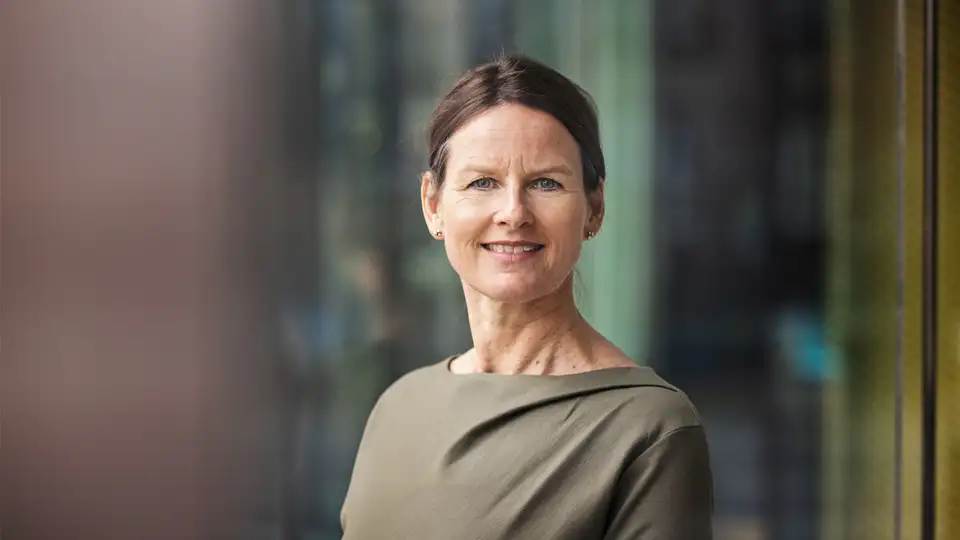
For Rikke Hougaard Zeberg, Director General of the Agency for Climate Data, the answer lies in something Denmark has been building for two decades: a mature culture of open data, cross-sector collaboration, and responsible digital governance.
Combined, these form what she believes is a scalable model for the EU’s transformation of the energy system.
Denmark’s advantage, Zeberg explains, begins with a long-standing tradition of sharing data across government and making it available for others to build on.
“We have a long tradition of cooperation and making data available. Our basic data programme is the vision for where we need to go in the utilities sector. Data must be accessible, standardised, interoperable, and able to be combined across systems,” she says.
The basic data programme, Denmark’s foundational data infrastructure for maps, addresses, property, and more, has already produced billions in economic and social value. The vision now is to replicate that success across the energy and utility sectors, where real-time data will be essential to managing fluctuating renewable energy.
Times have changed, requiring new approaches and technologies. Yet the objective remains the same: to share data efficiently across domains and realise significant benefits.
As Denmark transitions to renewable energy and continues electrifying across sectors such as transportation, heating, and industry, security of electricity supply becomes even more critical. This requires storage, imports, and the ability to meet flexible demand.
All of that requires data. Far more data than today’s energy system is used to handle.
“In the future energy system, data is crucial. Where is energy cheap? Where is it needed? And how do we share it efficiently? Without data, we cannot steer energy. And we need it at a scale we have never seen before.”
One of the central lessons from Denmark’s digital success story is that innovation rarely comes from government alone. The green transition is no exception.
Zeberg is explicit about why public–private collaboration matters:
“The innovation power and vision needed to move digitalisation forward doesn’t sit in the public sector, we are here to administer laws and rules. We need the market. And we need the utilities themselves.”
Just as Denmark’s digital public services were built over decades of collaboration among government, academia, municipalities, and private companies, the green transition likewise depends on collaboration and data sharing.
In such an ecosystem, utilities provide high-quality operational data, technology providers can develop innovative solutions on top of it, municipalities and state agencies can coordinate planning more effectively, and citizens gain access to services without unnecessary complexity.
This approach is already shaping Denmark’s national programme for digitalising the utilities sector (Forsyningsdigitaliseringsprogrammet). Yet even with strong foundations in place, the real challenge now is accelerating progress.
“We don’t have ten years like last time. The complexity is larger, and utilities, unlike basic data, are not all state-owned. We must find ways to move faster,” Zeberg stresses.
Case-based development, pilot projects, and iterative regulation may all be part of the answer.
Denmark’s approach is anchored in open, standardised, machine-readable data, a principle that aligns directly with the EU’s vision for interoperable data spaces.
But openness is no longer enough, Zeberg warns. The geopolitical climate has introduced new questions: Should all data be freely available? Are there categories of sensitive energy data that require restricted access? Who should have access, and under what conditions?
“Suddenly, we must ask: Is it smart that data is completely open? Are there data that some actors should not see? The geopolitical situation makes everything more complex.”
This means the Danish model needs evolution, not only openness, but secure, governed openness. That is precisely the ambition of the Agency for Climate Data.
“Where we are used to everything being open and available, we now have to consider whether some data should be protected, whether some actors should have more access than others, and at what times,” Zeberg reflects.
Beyond the energy system, data also plays an increasingly critical role in climate adaptation.
A flagship initiative is the Digital Twin of Denmark. It’s a 3D, object-based model of the entire country that integrates terrain, buildings, vegetation, property data, and more.
“We are building a digital twin of Denmark, where every tree and building is a data object. You can run live simulations, sea-level rise, flooding, infrastructure projects, solar farm optimisation. It has huge societal value.”
Fire brigades could model flood barriers. Municipalities could plan climate adaptation. Energy companies could test solar and wind layouts. Citizens can be efficiently involved in urban planning and in shaping development in cities and rural areas, including identifying suitable locations for renewable energy installations. The model becomes a shared foundation that will be updated continuously, ensuring a reliable, coherent, and robust model that can be used across the public sector and potentially across society, as part of Denmark’s future digital infrastructure.
Other countries are watching Denmark closely, from neighbouring countries to EU-level discussions on data spaces, and many see the Danish model as a possible template. When asked what it takes to scale such an approach, Zeberg highlights three lessons.
The first is shared investment. Digital infrastructure creates broad societal value, but no single actor captures the full economic return, which makes it challenging to fund through traditional market mechanisms.
“It’s the greater good. Big societal value, but not something one actor benefits from. The benefits are shared, and therefore, it requires joint financing. Without collective investment, the foundations, e.g. sector coupling, digital public services, and energy optimisation simply cannot be built,” she explains.
The second lesson is the need for strong governance and clear mandates. Collaboration does not emerge on its own. Utilities, municipalities, regions, and national authorities must work in sync, guided by shared standards and coordinated responsibilities. As Zeberg puts it, “All those actors must move in sync. You need governance and a clear mandate to make that happen.”
Without a structure to align decision-making, even well-designed data models fail to take hold across sectors.
The third lesson is vision beyond immediate interests. Digitalisation requires leaders who can see long-term, collective value rather than short-term organisational gains. Yet this is also where Zeberg sees one of the largest barriers today: political attention and funding.
“It’s hard to get investment in digital infrastructure. But without it, we won’t reach our climate goals.”
Zeberg believes that Denmark can play a leading role in shaping Europe’s emerging climate data ecosystems. The Danish model, which is built on open data, trusted governance, strong public–private collaboration, and the ability to couple sectors, offers a compelling path forward for an EU that still struggles with fragmentation and inconsistent data practices.
Yet for this model to scale, Europe must act decisively.
“Definitions and standards need to be aligned across borders, cross-border data platforms must be built, and security concerns must be addressed without undermining the openness that enables innovation. At the same time, governments need to invest in the digital infrastructure that will underpin future utility systems,” Zeberg says and warns:
“Without these steps, the green transition risks slowing under the weight of incompatible datasets and siloed national systems.”
Ultimately, the green transition cannot succeed without a digital transition. Zeberg’s message is unmistakable: if Europe intends to achieve climate neutrality by 2050, it must treat data infrastructure as seriously as physical infrastructure. Denmark has shown what is possible.
Across Europe, we now need to come together and build data infrastructure at scale. Denmark has been on this data journey for many years and thus offers great examples and inspiration. Europe now needs to follow and scale it.
🗞️ This article is a part of the white paper: Data Driven Climate Action - The Digital Backbone of the Green Transition. Read it here.

.png)