.png)
Mar 2026
This article was originally published in Decoding, our monthly briefing on the latest trends in government technology. Sign up here to receive future editions directly in your inbox.
.png)
Europe is the fastest-warming continent in the world, and it is also one of the most exposed. Exposed to fossil fuel markets it cannot control, to climate risks its institutions were not built to handle, and to a green transition that is moving too slowly to outpace the disruption it is meant to prevent.
Heatwaves, floods, and wildfires have become the new normal, and climate risks that scientists once projected for the future have already reached critical levels. Johan Rockström, director of the Potsdam Institute for Climate Impact Research, recently warned that we are now seeing “the first signs of a planet that is losing resilience, or losing strength to buffer heat stress”. For Europe, this is not an abstract warning, and the capacity to respond to it depends as much on data infrastructure as on political will.
The current destabilisation of the Middle East and the disruption of the Strait of Hormuz, through which a significant part of the world's seaborne oil trade passes, is a reminder that Europe’s exposure is not only a question of climate policy but also of dependency and sovereignty. We are living through a time where the conditions of globalisation are being rebuilt around resilience and regional trade, and climate change is not separate from that shift.
What connects geopolitical turbulence, energy prices and climate policy is Europe’s dependency. As long as the continent relies heavily on imports it cannot control, it will remain vulnerable to crises it did not cause. The green transition offers a possible solution to this vulnerability, and that is where data comes in. Accelerating the transition is not just a question of political will but also one of administrative capacity. Can approvals move fast enough? Can the right data reach the right decision-makers in time? Can reporting happen automatically, rather than becoming a bottleneck? These are some of the practical questions explored in this issue.
In this edition, you’ll read about:

The Commission’s 2026 work programme introduced the European integrated framework for climate resilience and risk management to help Member States prevent and prepare for the growing impacts of climate change. The framework will be adopted in the fourth quarter of 2026 and will include both non-legislative and legislative measures, ranging from legally binding rules to economic instruments and information tools. The main objective is to establish a more ambitious, comprehensive, and coherent EU approach to climate resilience and preparedness, covering both individual Member States and the EU as a whole.
In February, the Commission presented a common climate reference scenario for Europe based on a projected 3°C of global warming. The proposed integrated framework for climate resilience will introduce the principle of climate resilience by design and embed it across institutions and sectors. It will also provide decision-support tools based on Copernicus data to help stakeholders identify climate impacts in their regions.
Underpinning this framework is a recognition that resilience requires data infrastructure. The Green Deal Data Space (GDDS) and its implementation vehicle, the Data Space for a Sustainable Green Europe (SAGE) project, are building the shared digital foundations that enable cross-border climate action. The SAGE project is currently building ten use cases across four Green Deal priorities: Zero Pollution, Climate Adaptation, Biodiversity, and Circular Economy.
These initiatives point toward a single ambition: making climate data not just available, but actionable across borders, sectors, and institutions.
→ Read more here.
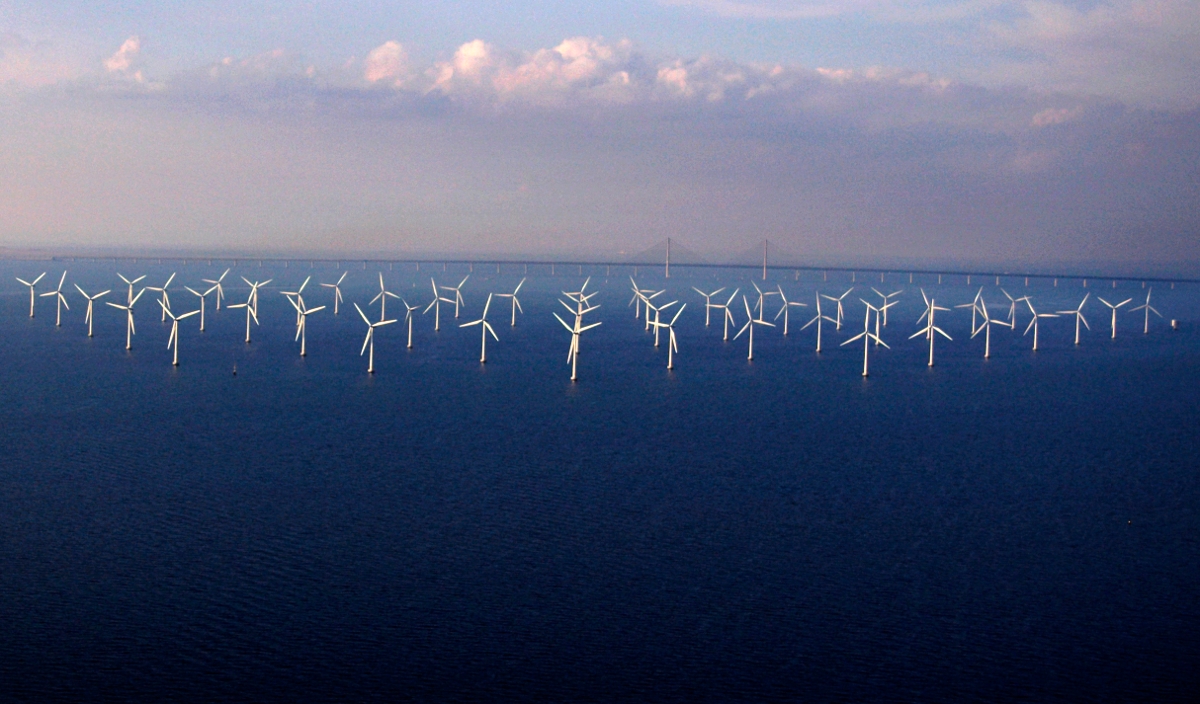
Across the Nordics, the green transition is running into a familiar obstacle: not a lack of ambition, but a gap between political targets and administrative capacity. The question is no longer whether to act, but whether public systems can move fast enough to make action count.
Sweden is confronting this directly. Despite having a world-leading tech sector and a highly digital population, many public-sector processes still rely on manual workflows. Renewable energy projects, grid upgrades, and industrial expansions all depend on permits and coordination among authorities, which can take years to secure. To address this, Sweden has established the Acceleration Office: a national coordination unit that streamlines real-time decision-making for green industrial projects central to Sweden’s competitiveness and sustainability ambitions.
The governance lesson is the same one Denmark learned years ago: technology only accelerates what is already well organised. As Kristina Alvendal, national industry coordinator at the Acceleration Office, puts it: “If the underlying processes are unclear or fragmented, you transfer that complexity into a digital format.” The groundwork has to come first.
Sweden has strong digital capabilities, but its administrative landscape is more decentralised, with 290 municipalities and numerous agencies using different systems. This diversity drives innovation but also creates complexity. Here, Denmark's experience becomes relevant. Built on shared national registers, common data standards, and decades of cross-agency coordination, Denmark's digital public infrastructure has created the conditions for automation and transparency that Sweden is now working towards.
The Nordic exchange offers an important insight: the countries making the fastest progress in data-driven green transition are not necessarily those with the most advanced technology. It is those who match ambition with execution and ensure that their public digital systems meet the expectations of a digital society.
→ Read more here.

Denmark sits on one of the world’s strongest foundations for data-driven climate policy. cBrain’s digital case management demonstrates how leveraging environmental data can accelerate the green transition, reduce administrative burdens, and deliver real environmental impact.
Working with the Danish Energy Agency on a support scheme for heat pumps, cBrain deployed a digital platform integrating automatically with Denmark's shared public registers. Eligibility checks run at login, and approval letters are issued automatically when the data confirms eligibility. A process that previously took around six months now takes six minutes.
The same architecture applies to forestation support. When a landowner applies, the system automatically calculates the plantable area, removes lakes, buildings, and existing forest, determines CO₂ and nitrogen effects, and checks for conflicts with protected zones or drinking water interests. Status updates flow back directly into Mars, the Multi Area Registration System, with changes visible to the public in real time. Reporting becomes a by-product of the workflow, not a separate bureaucratic task.
cBrain's Vice President of GovTech and Climate Solutions, Morten Østergaard, identifies the real barriers not in the technology, but in governance. The absence of APIs, open standards, and investment in data interfaces keeps potential locked away, even where the underlying data exists. His prescription maps directly onto the GDDS agenda: make data accessible through open standards and enable as many actors as possible to use it.
Building shared data infrastructure is necessary but not sufficient. The GDDS will only deliver on its promise if member states invest equally in the institutional capacity and open standards that allow public agencies and private companies to turn infrastructure into action.
→ Read more here.

🇪🇺 EU interoperability becomes mandatory: In April, Europe marks two years since the Interoperable Europe Act's launch. The 2026 agenda identifies several priorities, including developing data standards and an EU GovTech Stack, i.e. a shared toolbox for digitising the EU's public sector. Since January 2025, interoperability assessments have become mandatory for all new or significantly upgraded trans-European digital public services. The shift from voluntary to mandatory is significant: cross-border data exchange is now a baseline requirement, not a best practice.
🇬🇧 GOV.UK Chat moves toward public rollout: The UK's Government Digital Service published results this month from two public pilots of GOV.UK Chat, an AI assistant designed to help citizens navigate government services – from tax and benefits to visas. Accuracy improved significantly across the pilots, and the service will now roll out to GOV users.UK app, with broader website integration planned for later in 2026.
🇸🇪 Sweden to launch a government-issued Digital ID: Sweden has announced that its state-issued electronic identity, Sverige-ID, will launch on December 1st 2026, giving citizens and foreign residents a government alternative to BankID, the bank-developed digital ID used by over 8.7 million Swedes across roughly 7,500 services. Unlike BankID, Sverige-ID will meet the EU's highest trust level under the eIDAS regulation, enabling access to digital services across all EU member states and aligning with the European Digital Identity Wallet framework. It is being developed by the Police Authority in collaboration with the Agency for Digital Government.
🇩🇪 Germany building a shared digital foundation: Germany's Federal Ministry for Digital Affairs has concluded its second round of consultations on the Deutschland-Stack, a national initiative to establish modular, interoperable digital solutions for public administration based on open standards, covering areas including agent-based AI and virtualised infrastructure. The Stack is designed to address Germany's long-standing challenge of fragmented digital systems across 16 federal states and thousands of municipalities. Its success will depend on whether open standards can overcome years of siloed procurement.
🇳🇿 New Zealand rolls out a digital identity wallet: New Zealand is rolling out a digital identity wallet within its government services app Govt.nz by the end of March 2026. The first credential to be issued is a digital proof of age, replacing the physical Kiwi Access Card. Secure government messaging and digital driver's licences are to follow. The rollout is voluntary and signals a broader shift toward unified, app-based public service delivery built on shared government credential infrastructure.
For questions, comments, or suggestions regarding this article, please contact Emilia Lindén Guíñez.
Enjoyed this edition of Decoding? Subscribe here to receive future insights on digital public services directly in your inbox.

.png)